
Training
Every Moment Is a Training Moment
May 21, 2026
·Ashley Lionetti — Founder & Lead Trainer, Kindred Canine Co.
You don’t need a facility, a massive property, or a professional obstacle course to train a dog well. Some of the most meaningful training happens quietly, throughout everyday life.
Training wasn’t a scheduled event in our household. It wasn’t separated into neat little sessions with timers and treat pouches. It simply became part of the way we lived.
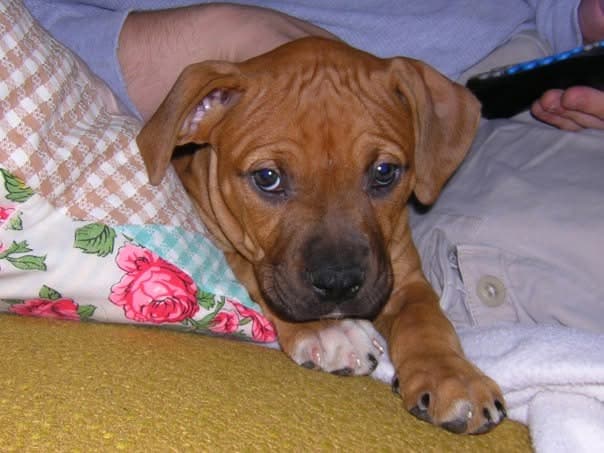
I was a freshman at The University of Vermont when my brother Dave brought home our first dog: a beautiful tan American Pit Bull Terrier puppy named Jager. Dave was still in high school, my brother Alex was in middle school, and my mother was completely unsuspecting — and utterly shocked.
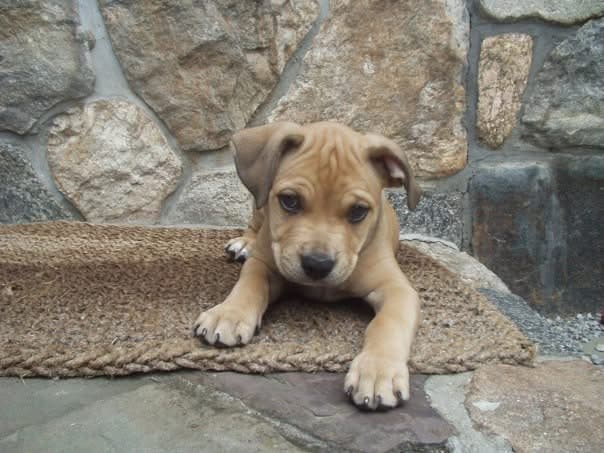
That following spring, I picked up Jada, a blue fawn runt with icy blue skin beneath her soft fawn coat, while my cousin Anthony Tarantino brought home her sister, Remy, a beautifully marked white-and-fawn puppy with striking patches and a completely different look from Jada. Anthony returned to Darien High School, while I headed back to the UVM dorms — puppy hidden inside my oversized hoodie pouch.
At that point, my dog experience consisted of three things: chronically begging my parents for a dog every holiday and every possible opportunity growing up, admiring our neighbors’ incredibly well-trained golden retriever, Sundae, and co-raising Jager with my family in Stamford.
Sundae was the dog who first made me fall in love with the idea of canine companionship. In early-90s Stamford, she would walk the Corrente children to the bus stop each morning, wait with them, and calmly return home by herself after they boarded the bus. No leash. No hovering. No panic. Just trust, routine, and relationship. That image stayed with me forever.
When Jager arrived, my mom and I searched the barely-functioning early-2000s internet for ‘pit bull’ and were immediately confused. The photos we found looked nothing like our goofy, oversized-headed puppy. We weren’t studying advanced training philosophies or behavioral theories. We were simply figuring it out as we went.
And honestly? That simplicity may have taught me the most.
Once the puppies were potty trained, we brought them everywhere with us. And when I say everywhere, I mean everywhere.
House parties.
Bull’s Head Diner.
Downtown Stamford.
The mall.
Friends’ houses.
Car rides.
Neighborhood walks.
If you saw one of the Lionetti kids back then, there was usually at least one pit bull nearby.
The dogs learned because they lived alongside us.
They learned patience.
They learned socialization.
They learned environmental neutrality.
They learned communication.
They learned how to settle.
They learned confidence.
Not because we ran perfectly structured ‘training sessions’ every hour of the day, but because they were included in life itself.
Looking back, I realized I had always been training dogs naturally — but over time, my handling became far more refined. The biggest evolution wasn’t necessarily the philosophy itself, but my communication, leash handling, timing, structure, and ability to guide dogs clearly and consistently through pressure, arousal, movement, and distraction.
One of the most important things I’ve learned is the power of leash communication and eye contact.
Dogs constantly look to us for information, regulation, and direction. Eye contact is often one of the fastest ways to interrupt escalating arousal and bring a dog mentally back into the moment. Combined with calm leash guidance, clear communication, timing, and follow-through, it creates clarity for the dog instead of chaos.
That clarity matters.
When a client dog arrives at Kindred Canine Co., the process is intentionally calm and structured from the very beginning. The owner passes me the leash, we walk inside together, and the dog is guided calmly to place.
No chaos.
No explosive greetings.
No overstimulation.
“Just structure, communication, and clarity.”
Throughout the day, training continues naturally through movement, routine, thresholds, transitions, and daily life itself.
Another valuable training opportunity happens the moment someone walks through the front door.
Dogs naturally move toward excitement, motion, food, attention, and activity. When my mother comes home from work, for example, the dogs immediately recognize that something exciting is happening.
That moment becomes a choice.
Do I allow rushing, jumping, chaotic greetings, and emotional escalation? Or do I ask the dogs to remain calmly on place, hold position on the couch, maintain eye contact, and wait patiently until invited to greet?
Both are technically options.
But only one consistently reinforces emotional regulation.
The same applies to guests entering the home, food being prepared in the kitchen, deliveries arriving, or movement throughout the house. Everyday life constantly presents opportunities to either reinforce calm behavior or accidentally reward impulsive behavior.
One of the simplest but most effective tools I use throughout the day is keeping a lightweight leash attached while dogs are actively learning.
Many owners unintentionally skip valuable training opportunities because putting on a training collar and leash feels inconvenient in the moment. It becomes easier to simply open the door, allow free movement, or react after the dog is already overstimulated.
Keeping the leash attached eliminates extra steps and allows immediate communication, guidance, accountability, and follow-through throughout the day.
Of course, there are plenty of times dogs are completely off-leash and relaxed. But during active learning periods, especially with younger dogs or newer client dogs, maintaining easy access to communication creates consistency and dramatically improves results.
The goal is not constant correction.
The goal is clarity.
Sometimes even something as simple as walking into the kitchen for a glass of water becomes a training exercise. If a newer dog breaks place repeatedly or struggles to settle fully, I don’t simply rush through the moment. I slow down, reset the dog calmly, reestablish eye contact, reinforce the expectation, and wait until the dog is mentally settled before moving forward.
Sometimes getting a drink of water is no longer ‘quick.’
And that’s okay.
Those quiet moments of consistency are where lasting behavioral change actually happens.
One of the biggest misconceptions in dog training is the belief that dogs need constant stimulation, endless excitement, or nonstop play in order to feel fulfilled.
In reality, many dogs — especially intelligent, working, and high-drive breeds — thrive most when they are mentally engaged, emotionally balanced, and given clear structure.
That’s why my daycare and training programs are intentionally small, controlled, and individualized. I carefully evaluate temperament, energy, play style, recovery, arousal levels, and social compatibility before integrating dogs together.
I don’t believe in throwing random dogs into chaotic environments and hoping for the best.
Dogs are social animals, but successful socialization requires guidance, boundaries, supervision, and thoughtful management.
One of my proudest moments as a trainer is watching multiple dogs settle together peacefully in complete synchronicity — calmly holding place, responding to commands together, and learning how to coexist respectfully within a shared environment.
And contrary to what many people assume, the dogs genuinely love it.

Structure creates clarity.
Clarity creates confidence.
And confidence creates freedom.
That philosophy shaped the dogs I grew up with, the dogs I rehabilitate now, and ultimately the foundation of Kindred Canine Co.
Because at the end of the day, dog training is not just about commands.
It’s about learning how to live alongside another species with communication, fairness, structure, patience, and mutual understanding.
And sometimes, the most important lessons are taught in the quiet moments between everything else.
About the Author
Ashley Lionetti
Founder & Lead Trainer · Bully Breed Specialist
Kindred Canine Co.
May 21, 2026